
1
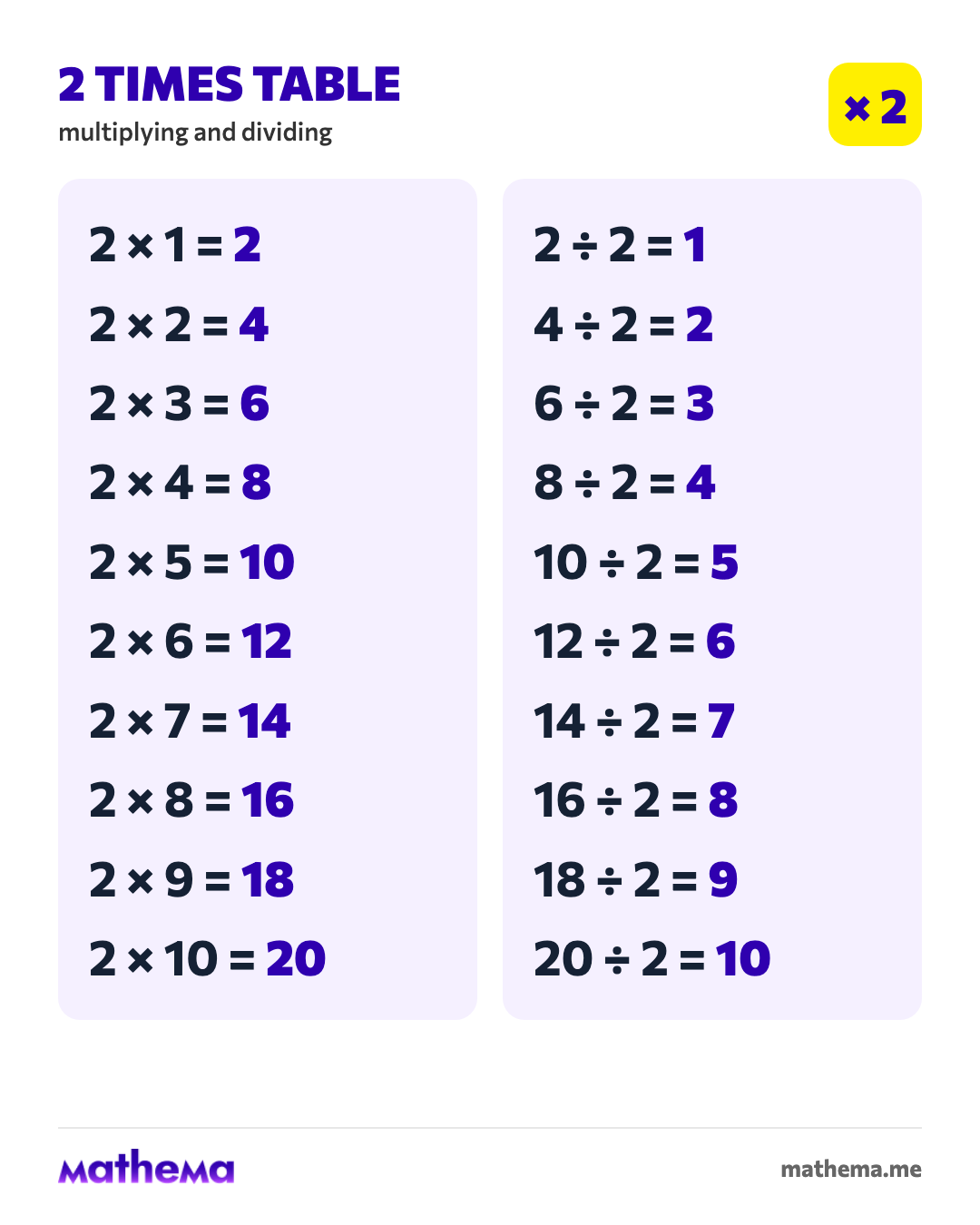
× 2 means double
Multiplying by 2 is adding a number to itself: 8 × 2 = 8 + 8 = 16.
Multiplying and dividing by 2: see it, print it, practise online
Pick the tables and a mode. We’ll show mistakes on a map, so they can be practised again straight away.
Tips for parents: tricks that leave far less to learn by heart.
Multiplying by 2 is adding a number to itself: 8 × 2 = 8 + 8 = 16.
Answers in the 2 times table end in 0, 2, 4, 6 or 8: 2, 4, 6 … 20. An odd answer means a slip somewhere.
The order doesn’t change the answer: 3 × 7 = 7 × 3. Learn half the grid and your child already knows the other half.
Multiplying by 2 is doubling: 6 × 2 is 6 + 6 = 12. Count pairs of socks or bike wheels together — your child soon sees that each answer is 2 more than the last.
In Year 2, together with the 5 and 10 times tables. It’s usually the first table children learn.
Dividing by 2 is halving: 16 ÷ 2 = 8, because 8 × 2 = 16. To check an answer, multiply it by 2 — you should get back the number you started with.
Most children need a few weeks of 10–15 minutes a day. Short and regular beats an hour once a week.
Yes. A colour and a black-and-white grid, a column poster and a blank grid to fill in — all A4, free and with no sign-up.
A maths tutor for Year 2 pupils explains it so it stays: online, one to one, at your child’s pace.
